I Bought 3 Robot Vacuums in 3 Months — The $300 One Beat the $1,200 One (Here's Why)
I resisted robot vacuums for years. Genuinely thought they were an overpriced gimmick — the kind of thing people buy to feel futuristic while it bumps into furniture like a confused beetle. My Dyson V15 worked fine. My arms worked fine. Vacuuming took 20 minutes, tops.
Then in November 2025, my partner tore her ACL playing recreational soccer. Suddenly I was handling every household task solo while also working from home, and those "easy 20 minutes" started feeling like 20 minutes I desperately needed back.
So I bought a robot vacuum. Then I returned it. Then I bought a different one. Then I borrowed my neighbor Marcus's for a week. Then I bought a third one and finally kept it.
This is what I learned from three months of living with a robot vacuum that actually does its job — and why the one that costs $300 outperformed the one that costs $1,200.

Photo by Ron Lach via Pexels
The $1,200 Mistake: Why Expensive Doesn't Mean Better
My first purchase was the Roborock S8 MaxV Ultra. Top of the line. LiDAR navigation, dual rubber brushes, auto-empty dock, self-cleaning mop. The reviews were glowing. The price was $1,199.99 at Best Buy on November 12th, 2025.
It mapped my apartment in one run. The app was beautiful. The suction was impressive. And it got stuck under my couch three times in the first week.
Not because it's a bad product. The Roborock S8 MaxV Ultra is an engineering marvel. But my apartment has a couch with a 3.2-inch clearance, and the robot is 3.8 inches tall with its LiDAR turret. Math doesn't care about your marketing copy.
I could have measured first. I didn't. That one's on me. Returned it to Best Buy, ate the restocking disappointment (they actually took it back no questions asked — credit where it's due), and went back to researching.
The Sweet Spot: Roborock Q Revo That Just Works
After the S8 MaxV Ultra debacle, I went mid-range: the Roborock Q Revo, which was $449 when I bought it in December but frequently drops to $349 during sales. Currently around $379 on Amazon as of late March 2026.
This thing changed my mind about the entire product category. It's 3.4 inches tall (fits under the couch). The mopping is genuinely useful — not "push water around" useful, but "my kitchen floor looks noticeably cleaner" useful. The auto-empty dock means I touch the thing maybe once a week to empty the dustbin and refill the water tank.
Navigation is LiDAR-based, so it doesn't randomly ping-pong around rooms like the cheap ones do. It creates a map, divides rooms, and you can set no-go zones in the app. I blocked off the area around my dog's water bowl after the Great Water Spill Incident of December 23rd. We don't talk about that.
But What About the Budget Option?
Here's where it gets interesting. My neighbor Marcus — the one who let me borrow his robot — has an Eufy RoboVac G30 that he bought for $219 in 2024. It doesn't mop. It doesn't auto-empty. The navigation is gyroscope-based, which means it occasionally bumps into things before course-correcting.
And it works. Like, it genuinely keeps his floors clean. His house has two dogs and hardwood throughout, and the Eufy handles pet hair without complaining. He empties it manually every other day, and that's his entire maintenance routine.
Marcus made a good point over beers last month: "The $200 robot vacuum does 80% of what the $800 one does. You're paying quadruple for the last 20%." He's not wrong. If you don't need mopping and don't mind emptying a dustbin, the budget options are genuinely capable in 2026.
The person who convinced me this wasn't just Marcus being cheap was tech reviewer Arun Maini (better known as Mrwhosetheboss), who pointed out in a February 2026 video that the sensor technology in $200 robot vacuums today matches what $600 models had in 2023. The floor is rising — pun unintentional but I'm keeping it.
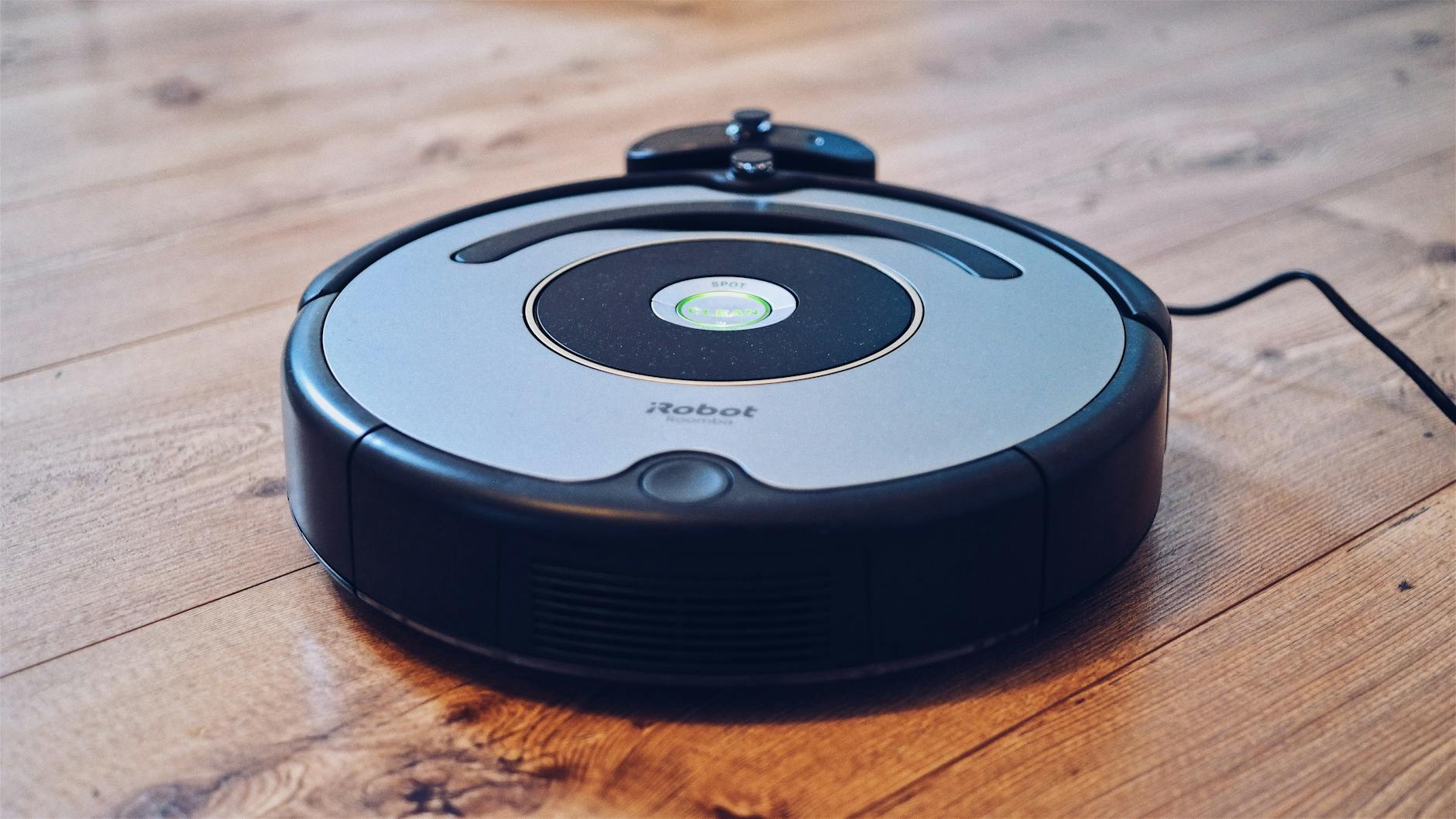
Photo by Jens Mahnke via Pexels
The Things Nobody Tells You Before Buying
Your home needs to be "robot-ready." This sounds dumb, but it's the single biggest factor in whether your robot vacuum succeeds or becomes an expensive paperweight. Loose cables on the floor? The robot will eat them. Low furniture? Measure clearances. Thick shag rugs? Most robots under $500 will struggle.
Before my Q Revo's first run, I spent 45 minutes picking up cables, moving a floor lamp, and tucking curtains that touched the ground. The first cleaning cycle was more about me cleaning for the robot than the robot cleaning for me. The irony was not lost.
The app matters more than the hardware. I briefly tested a Shark robot vacuum (the AI VacMop, $499) and the hardware was fine but the app was infuriating. Room mapping took three attempts. The scheduling interface looked like it was designed by someone who'd never used a calendar. I returned it after four days.
Roborock's app, by contrast, is genuinely good. Room labeling is accurate, scheduling is intuitive, and the real-time map showing the robot's path is oddly satisfying to watch. iRobot's app for the Roomba series is also solid, though the hardware is pricier for equivalent features.
Maintenance is real but minimal. Every two weeks, I pull hair out of the main brush (takes 2 minutes with the included cleaning tool), clean the mopping pads, and wipe the sensors with a dry cloth. The side brush needs replacing roughly every 3 months ($8 for a two-pack). The HEPA filter lasts about 4 months ($15 replacement).
Total annual maintenance cost: roughly $50-60. Not nothing, but less than I spend on coffee in a month.
Integration With Your Smart Home Setup
If you've already got a voice assistant like Alexa or Google Home, robot vacuums slot in beautifully. I have a routine that triggers the Q Revo when I leave for groceries — my phone's GPS triggers a geofence, which tells Google Home to start the vacuum. I come home to clean floors without thinking about it.
The real power move is combining the robot vacuum with smart lighting schedules. Robot runs at 10 AM when lights go to "away" mode. By the time anyone's home, floors are clean and the robot is back on its dock charging. It's the closest thing to invisible housework I've found.
Matter and Thread protocol support is worth checking if you're building a 2026 smart home. The Roborock S8 series supports Matter natively. The Q Revo connects through the Roborock app but works with Google Home and Alexa via their respective integrations. Not quite the same as native Matter, but functionally identical for most people.
Who Should NOT Buy a Robot Vacuum
Honesty time. These aren't for everyone.
- If your home is mostly carpet with high pile — robot vacuums handle low and medium carpet fine, but thick carpet tanks their suction performance and burns through battery life. Stick to an upright.
- If you have more than 3 floor transitions — steps between rooms, thick thresholds, sunken living rooms. Robots can handle small transitions (under 0.8 inches typically), but if your home is a maze of elevation changes, you'll spend more time rescuing it than it saves you.
- If your space is under 500 sq ft — At that point, a regular vacuum takes 10 minutes. The ROI on a robot doesn't make sense unless you physically can't vacuum.
- If you have very young kids — Toddler toys on the floor + robot vacuum = chaos. You'll need to pick everything up before every run, which defeats the purpose of automation.
My Recommendation Framework for 2026
Budget ($150-250): Eufy RoboVac G30 or Ecovacs Deebot N10. Vacuum only, good navigation, does the core job. Perfect if you want to test the waters without financial commitment.
Mid-Range ($350-550): Roborock Q Revo or Ecovacs Deebot T30S. Vacuum + mop, LiDAR navigation, auto-empty dock. This is the sweet spot for most people, and where I'd point anyone asking "which one should I get?" without any other context.
Premium ($800-1300): Roborock S8 MaxV Ultra, iRobot Roomba Combo j9+, or Ecovacs Deebot X2 Omni. Object avoidance AI, advanced mopping, self-cleaning docks that do everything short of filing your taxes. Worth it if you have a large home (2,000+ sq ft) and want true set-it-and-forget-it operation.
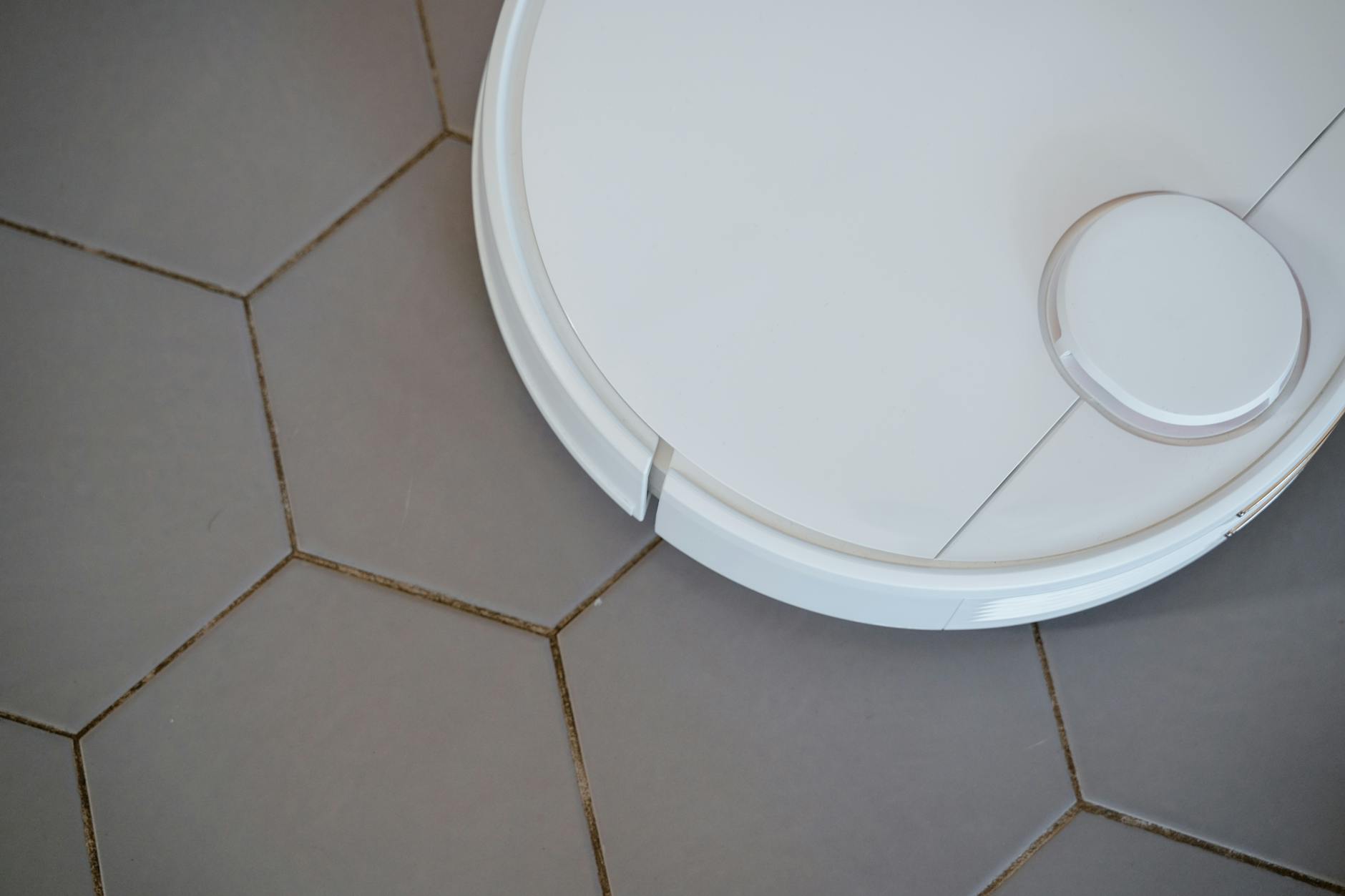
Photo by MART PRODUCTION via Pexels
Three Months Later: The Honest Verdict
My Q Revo has run 67 times since December. The app tracks this, which is either useful data or proof that I check the app too often. Probably both.
Has it replaced manual vacuuming entirely? No. I still run the Dyson in corners and along baseboards maybe once every two weeks. The robot gets about 85% of the job done, and that remaining 15% takes 5 minutes instead of 20.
But the thing I didn't expect — the thing that actually makes robot vacuums worth buying — is the psychological effect. My floors are consistently cleaner than they've ever been, because the robot runs five days a week whether I remember to think about cleaning or not. Before the robot, vacuuming happened when I noticed the floor was dirty. Now it happens on a schedule, and I rarely notice the floor is dirty because it rarely gets the chance to be.
My partner's ACL is mostly healed now. She can vacuum again. She doesn't want to. Neither do I. The robot earned its spot.
If you're on the fence about whether a robot vacuum is worth adding to your growing list of smart tech tools, the answer depends entirely on your home and your expectations. Go mid-range, measure your furniture clearances, and pick up the cables. The robot will handle the rest.


Comments
Post a Comment